
13. March 2026
What Is Health Insurance and Why It Matters in the U.S.
Health insurance is one of the most important components of the American healthcare system. In a country where medical costs can reach thousands or even hundreds of thousands of dollars, having health coverage often determines whether individuals can access care without facing financial hardship. Understanding how health insurance works and why it matters is essential not only for individuals and families but also for employers, policymakers, and healthcare professionals.
In the United States, health insurance is designed to reduce the financial burden of medical care while improving access to healthcare services. This article explains what health insurance is, how it works, why it is important, and what Americans should know about coverage today.
Understanding Health Insurance
According to the official definition provided by HealthCare.gov glossary definition of health insurance, health insurance is a contract in which an insurer agrees to pay part or all of a person's healthcare costs in exchange for a premium.
In practical terms, health insurance allows individuals to receive medical care while sharing the cost with an insurance company. Instead of paying the full cost of services such as doctor visits, hospital stays, medications, and preventive care, insured individuals typically pay only a portion of these costs through premiums, deductibles, and copayments.
Health insurance policies vary depending on the type of plan, the insurer, and the healthcare network. Some plans provide broader coverage with higher monthly premiums, while others require more out-of-pocket payments but offer lower monthly costs.
Health insurance coverage in the United States can come from several sources, including employer-sponsored plans, individual marketplace plans, and government programs such as Medicare and Medicaid.
The Current State of Health Insurance in the United States
Health insurance coverage has expanded significantly over the past decade, although millions of Americans still remain uninsured.
Recent national estimates show that approximately 92% of Americans had health insurance coverage in 2024, leaving roughly 8% of the population uninsured.
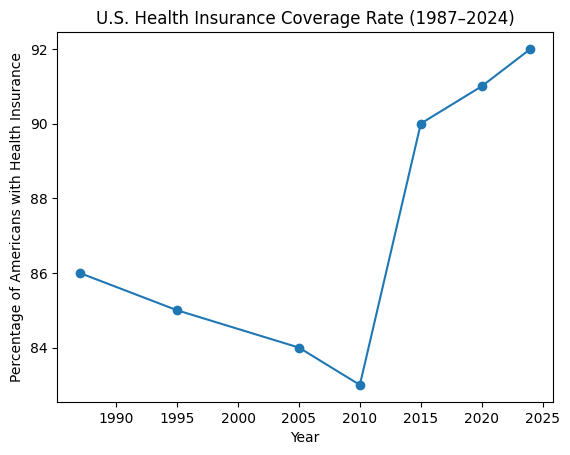
Figure 1: U.S. Health Insurance Coverage Rate (1987–2024). Coverage has significantly increased after the implementation of major healthcare reforms and currently exceeds 90 percent of the population.
Despite improvements, approximately 26 million Americans were still uninsured in 2023, demonstrating that access to coverage remains a major issue in the U.S. healthcare system.
Why Health Insurance Matters
Health insurance plays a critical role in both personal financial protection and public health outcomes.
One of the most important benefits of insurance is protection from extremely high medical costs. According to HealthCare.gov explanation of financial protection from coverage, individuals without insurance may face significant medical bills after accidents or illnesses, which can lead to severe financial hardship or even bankruptcy.
Healthcare in the United States is among the most expensive in the world. Without insurance coverage, a simple emergency room visit can cost several thousand dollars, while hospital stays or surgeries can cost tens of thousands of dollars.
Health insurance helps individuals manage these costs by spreading financial risk across a large group of insured individuals. When many people pay premiums into the system, the insurance company can help cover medical expenses for those who need care.
Insurance coverage also improves access to healthcare services. People with insurance are more likely to seek preventive care, receive regular checkups, and manage chronic conditions before they become serious.
What Health Insurance Typically Covers
Under U.S. law, many insurance plans must include a set of services known as essential health benefits.
According to the definition provided by HealthCare.gov explanation of essential health benefits, these benefits include categories of services that most insurance plans must cover under the Affordable Care Act.
The following table summarizes the most common healthcare services included in many plans.
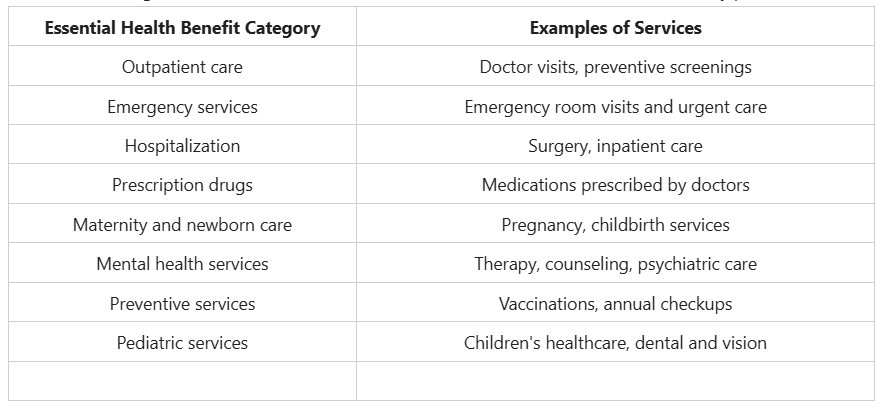
These benefits ensure that individuals and families receive coverage for a broad range of medical services that support overall health.
Types of Health Insurance in the U.S.
Health insurance in the United States comes in several forms, depending on how coverage is obtained.
Employer-sponsored insurance remains the most common form of coverage. In this model, employers provide health insurance to employees as part of their benefits package. Employers typically share the cost of premiums with employees, making coverage more affordable.
Another common option is individual and family coverage purchased through the Health Insurance Marketplace. The Marketplace, explained by HealthCare.gov guide to the Health Insurance Marketplace, allows individuals and families to compare plans and enroll in coverage, often with financial assistance based on income.
Government programs also play a major role in the healthcare system. Medicare provides coverage for adults age 65 and older, while Medicaid offers coverage for eligible low-income individuals and families.
These programs ensure that vulnerable populations have access to healthcare even if they cannot obtain private insurance.
How Health Insurance Impacts Financial Security
Health insurance is not only a healthcare issue but also a financial one. Medical expenses are one of the leading causes of financial stress for many American households.
Without coverage, individuals must pay the full cost of medical treatment. Even routine healthcare services can become expensive when paid entirely out of pocket.
Insurance reduces this financial risk by distributing costs across many policyholders. Instead of facing unpredictable medical expenses, insured individuals pay predictable monthly premiums and smaller out-of-pocket costs when they receive care.
This financial stability is particularly important during medical emergencies or when managing chronic illnesses that require ongoing treatment.
Challenges in the U.S. Health Insurance System
Although health insurance coverage has improved in recent years, challenges still remain.
Some individuals struggle with affordability, particularly when premiums, deductibles, and out-of-pocket costs are high. Others may lack access to employer-sponsored insurance and may not qualify for government programs.
Geographic differences also influence insurance coverage rates. Some states have significantly higher uninsured populations than others, often due to policy differences and economic factors.
These disparities highlight the complexity of the U.S. healthcare system and the ongoing need for policy improvements that expand access and affordability.
Frequently Asked Questions (FAQ)
1. What is health insurance in simple terms?
Health insurance is a contract between a person and an insurance company that helps pay for medical expenses. The individual pays a monthly premium, and the insurance company covers part of the cost of healthcare services.
2. Why is health insurance important in the United States?
Health insurance protects individuals from extremely high medical costs and helps ensure access to necessary healthcare services. Without coverage, medical bills can become financially overwhelming.
3. How many Americans have health insurance?
Approximately 92% of Americans had health insurance coverage in 2024, leaving about 8% uninsured.
4. What are essential health benefits?
Essential health benefits are categories of healthcare services that most insurance plans must cover, including emergency care, hospitalization, prescription drugs, maternity care, and preventive services.
5. What happens if someone does not have health insurance?
Individuals without insurance must pay the full cost of medical services out of pocket. This can lead to significant financial burdens if serious illness or injury occurs.